

The Shift to Digital Smile Planning
3D imaging and digital scanning replace traditional putty impressions with a fully digital workflow, where a small wand and a few clicks capture your teeth in precise detail. Remember the goopy trays and gag-inducing impressions of the past? Those days are fading fast.
This shift isn’t just about convenience. It changes how your smile is planned, previewed, and delivered.
With today’s 3D imaging and digital scanning tools, you can actually see a preview of your future smile before you commit to treatment. That means fewer surprises, more confidence, and a customized treatment plan built around your unique anatomy.
In this guide, we’ll walk through what these technologies are, how they work together, and why they matter for anyone considering clear aligners, braces, or a full smile refresh.

What Is 3D Dental Imaging and Digital Scanning?
3D dental imaging and digital scanning are two complementary technologies used to plan modern dental treatment. 3D imaging uses a Cone Beam CT (CBCT) scanner to capture a three-dimensional view of your teeth, jaw, nerves, and airway. Digital scanning uses a handheld intraoral scanner to build a precise 3D model of your teeth and gums in real time.
Instead of a flat 2D X-ray, your provider sees a rotatable, layered model of your entire oral anatomy. The intraoral scanner (like the iTero digital scanner) captures thousands of images that stitch together into a detailed 3D model on the screen, ready in minutes.
Together, these two technologies replace the guesswork of putty impressions and flat films. One captures the outside of your teeth in detail. The other captures the deeper bone and jaw structure. Combined, they give your care team a complete picture for planning your smile.
Compared to traditional methods, digital tools are faster, cleaner, and much more accurate.
The Technology Behind Your Perfect Smile
Modern practices use a suite of digital tools to design and deliver beautiful smiles. Here are the key players:
- Intraoral scanners (iTero, TRIOS, Primescan): Handheld wands that create detailed 3D models of your teeth in real time. No trays, no goop.
- Cone Beam CT (CBCT): A specialized 3D X-ray that maps bone structure, tooth roots, and jaw anatomy for complex planning.
- Digital Smile Design (DSD) software: Design programs that let your providers virtually move your teeth into their ideal positions and show you the preview.
- CEREC and CAD/CAM systems: Used in restorative dentistry for same-day crowns and precision-fit restorations.
- Guided implant surgery software: Digital scans and CBCT data combine to plan implant placement with millimeter accuracy before the procedure begins.
At our practice, our team uses the iTero digital scanner to build accurate models for clear aligners, porcelain veneers, and other treatments. It’s the same technology that powers many of today’s most advanced smile designs.
How Does Digital Smile Planning Work?
Curious what actually happens behind the scenes? Here’s the process, broken down.
- Digital scan and imaging capture. You’ll sit comfortably while a small wand glides around your teeth. If needed, a CBCT scan captures your jaw and bone structure in 3D.
- 3D model creation and analysis. The software stitches everything together into a highly detailed model your provider can rotate, zoom, and study from every angle.
- Smile design and virtual preview. Using digital smile design software, your provider maps out how each tooth should move or be reshaped. You get to see a preview of your projected result.
- Treatment planning and fabrication. Once you approve the plan, the digital files are used to fabricate clear aligners, guide bracket placement for metal braces or clear braces, or manufacture other appliances with precision.
- Precise, predictable delivery. Because everything is planned digitally, each visit follows a clear plan. Fewer adjustments, fewer surprises, better results.
Benefits of Digital Scanning Over Traditional Methods
Many practices have moved to digital for good reason. The advantages are hard to ignore.
- No messy impression material. Say goodbye to the trays and putty that used to trigger gag reflexes.
- Faster visits. A digital scan typically takes just a few minutes , versus the setup and wait time of traditional impressions.
- Higher accuracy. Digital models capture fine detail down to the micron , which often means fewer adjustments and better-fitting appliances.
- Preview your results. You can see a projected version of your smile before committing to treatment.
- Easier record-keeping. Digital files are stored securely and can be shared quickly and securely between specialists on your care team.
For people of all ages who’ve been putting off treatment because of unpleasant memories or fear of the unknown, digital scanning changes the whole experience. It’s quicker, quieter, and much more comfortable.
Applications Across Cosmetic and Restorative Dentistry
Digital scanning and 3D imaging support many treatments, including:
- porcelain veneers: 3D scans and digital smile design let you preview veneer shape, size, and proportion before a single tooth is prepped.
- Invisalign and clear aligners: Precise 3D scans drive the design of each aligner tray, tracking tooth movement stage by stage.
- Metal braces and clear braces: Digital planning helps your provider place brackets with pinpoint accuracy for efficient results.
- dental implants with guided surgery: CBCT scans map bone and nerve anatomy so implant placement can be planned in software and guided during the procedure.
- CEREC same-day restorations: Digital scans feed directly into milling units, producing crowns, inlays, and onlays in a single visit.
- smile makeover: Digital smile design lets you visualize the end result before treatment begins.
The common thread? Better data leads to better outcomes.
What to Expect at Your Digital Scanning Appointment
If you’ve never had a digital scan, here’s what your visit typically looks like.
You’ll settle into the chair, and one of our team members will use a small, wand-style scanner to gently trace around your teeth. There’s no bite tray, no material to swallow, and no waiting for anything to set. Most scans take about 15 to 30 minutes from start to finish.
If a CBCT scan is part of your visit, you’ll stand or sit while the machine rotates around your head. The scan is quick, quiet, and uses a targeted, low-dose approach .
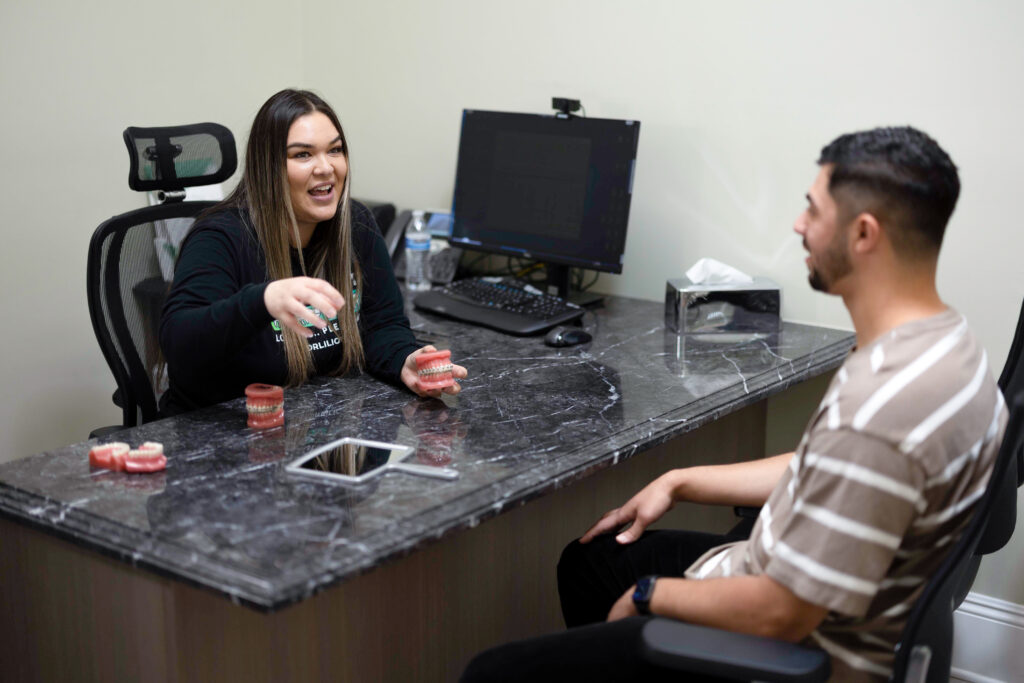
Once your scan is complete, your provider will walk you through the 3D model on the screen. You can see your teeth from every angle, ask questions, and talk through the recommended options. Many people find this part of the visit genuinely fun. It’s the first real look at what your smile could become.
Frequently Asked Questions
How accurate is 3D dental scanning? Digital intraoral scanners capture your teeth and gums in fine detail, and are generally more accurate than traditional putty impressions . That accuracy translates into better-fitting aligners, appliances, and restorations.
Is digital scanning safe? Yes. Intraoral scanners use safe light-based technology, not radiation. CBCT imaging does use X-rays, but at a targeted, low dose designed specifically for dental use.
Can I really see my smile before treatment? In many cases, yes. Digital smile design software creates a projected image of your future smile based on your treatment plan, so you can see the direction before you commit.
Does insurance cover digital imaging? Coverage varies by plan. Our team will help you understand your benefits and offer financing options to keep treatment on your budget.
How long does a digital scan take? Most intraoral scans take just a few minutes. Your full visit, including review and discussion, is usually 15 to 30 minutes.
Ready to See Your Future Smile?
Digital technology has reshaped what’s possible in cosmetic and orthodontic care. Faster visits, greater accuracy, and the chance to preview your results before treatment begins add up to a big leap forward from the old days of messy impressions and educated guesses.
If you’re curious about porcelain veneers, clear aligners, metal braces, clear braces, or exploring what’s possible for your smile, our team would love to show you. Book a consultation and see your smile story come to life on the screen. We’re here to make you smile.